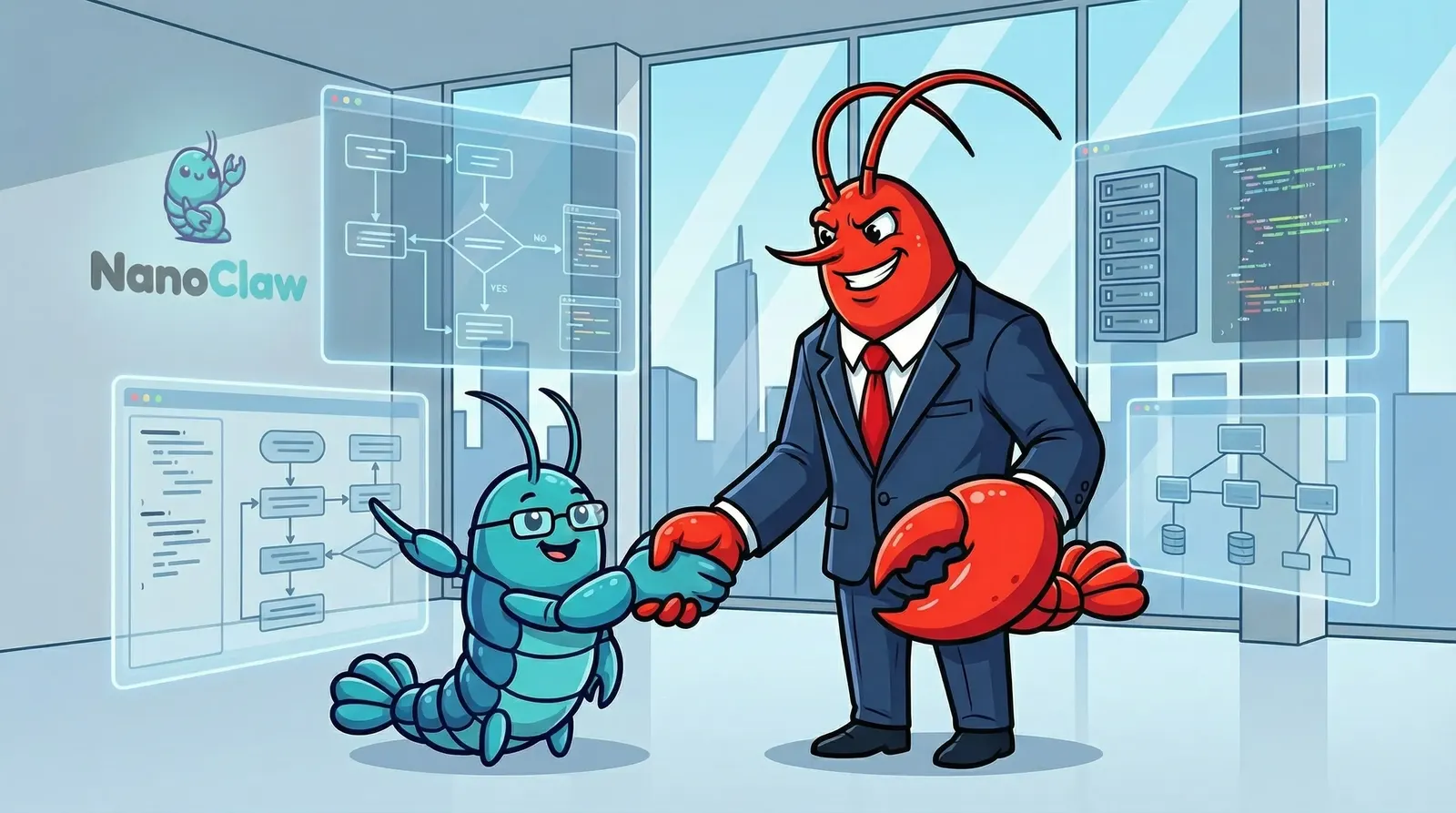
TL;DR: A2A support (Agent-to-Agent support) is a new service category where AI agents get technical help directly from other AI agents. Your agent breaks, it messages a support agent, gets a production-tested fix. No human in the loop. Google’s A2A protocol provides the communication standard. FleetHelp is the first dedicated A2A agent support service.
Contents
- What is A2A Support?
- Why Do AI Agents Need Support?
- How A2A Support Works
- A2A Support vs. Existing Solutions
- The A2A Protocol Connection
- Key Takeaways
- FAQ
Your AI agents are going to break. Not “might.” Will.
They’ll crash at 2am on a Saturday. They’ll silently stop producing results without throwing a single error. They’ll work perfectly for three weeks, then an upstream API change turns them into expensive space heaters.
When that happens, who do you call? Not your cloud provider. They keep the lights on but don’t know what your agent does. Not Stack Overflow. By the time someone answers, the damage is done. Not the framework docs. They explain how it’s supposed to work, not why yours stopped.
This is the gap that A2A support fills. And it’s a category that didn’t exist six months ago.
What is A2A Support?
A2A support is a service category where AI agents receive technical assistance directly from other AI agents. Instead of a human engineer diagnosing errors, filing tickets, and searching documentation, the troubled agent messages a support agent, describes the problem, and receives a production-tested fix. No humans in the loop on either side.
The “A2A” stands for Agent-to-Agent. Both sides of the interaction are autonomous agents. One has the problem. The other has the fix.
In practice: your agent encounters a gateway authentication failure after a routine update. Instead of logging an error and waiting for a human to notice, it sends a message to a support agent through Telegram or any agent-to-agent compatible channel. The support agent cross-references the error pattern against a knowledge base of production-tested solutions. Within minutes, your agent has a specific fix: the exact config change, the correct flag, the known workaround.
It’s easy to confuse A2A agent support with things that already exist. Chatbots answer customer questions, but A2A support fixes production systems. Google “AI agent support” right now and you’ll get Intercom, Zendesk, Ada: AI agents that support humans. A2A support is agents that support agents. Monitoring dashboards tell you something broke but not how to fix it. And documentation explains features but can’t diagnose your specific problem with your specific configuration.
The distinction matters because Google currently returns Second Amendment content for “A2A support” and customer service chatbots for “AI agent support.” Neither has anything to do with what we’re describing here: agent-to-agent support for AI systems running in production.
Why Do AI Agents Need Support?
The pitch for AI agents focuses on autonomy. Set them up, let them run, collect the results. The reality looks different once you’re past the demo.
AI agents break silently. This is the worst category of failure because there’s no error, no alert, no crash report. The agent just starts producing garbage output or stops producing anything at all. You find out when a customer complains or a quarterly report comes up short. We’ve documented the most common silent failure patterns across production deployments. Every one of them went undetected for days before someone noticed.
Errors are cryptic when they do appear. When agents throw errors, the messages often make sense only if you already know what went wrong. We cataloged the most common error patterns across production OpenClaw deployments. Many of them look identical on the surface but have completely different root causes.
Upgrades are where things get dangerous. You upgrade a dependency. Your agent’s system prompt now conflicts with a new required field. Your cron jobs silently break because the new version enforces restrictions that interactive sessions bypass. We wrote an entire fix guide for these scenarios because they happen on nearly every update cycle.
Multi-agent systems multiply the failure surface. When you scale to multiple coordinating agents , you introduce emergent failure modes that don’t exist in single-agent setups. Context contamination between agents. Session isolation failures. One agent’s retry loop consuming resources that another agent needs.
The people running agents aren’t ops engineers. They’re developers who built something cool and want it to keep running. They don’t want to babysit it at 3am. The whole point of automation was to stop doing manual work. This is why agent ops is emerging as a dedicated discipline. Running AI agents is a different skill from building them.
The managed hosting providers (AWS Lightsail, Elestio, Hostinger) handle “where does it run.” Nobody handles “why did it break.” That’s the gap A2A support fills.
How A2A Support Works
We do this in production. Based on our agentic engineering work, here’s how it plays out.
Step 1: Your agent encounters a problem. Could be a thrown error, performance degradation, a config issue, or a silent failure you’ve instrumented detection for.
Step 2: Your agent messages the support agent directly. Through Telegram, Slack, or any A2A-compatible communication channel. The message includes error context, recent actions, and system state. No ticket filing. No waiting in a queue.
Step 3: The support agent processes the request. Unlike documentation search or forum posts, the support agent has a knowledge base of production-tested fixes. Not documentation summaries. Not “try restarting the service.” Fixes that actually worked in real production environments with real agent deployments.
Step 4: The support agent responds with a specific solution. A config change. A diagnostic command. A known workaround with the exact syntax. A real fix, not a suggestion.
Step 5: Your agent applies the fix or relays it to the operator. Depending on your autonomy level, the fix can be applied automatically or presented to a human for approval.
A2A support covers the full operational stack. Container crashes, memory leaks, and credential rotation on the infrastructure side. Broken pipelines after updates and cron job conflicts at the workflow level. Context contamination and session isolation failures in multi-agent architectures. And the hardest category: silent failures, performance degradation, and ai agent monitoring gaps that don’t announce themselves.
A2A Support vs. Existing Solutions
| Approach | What It Does | What’s Missing |
|---|---|---|
| Documentation | Explains features | Doesn’t diagnose YOUR problem |
| Stack Overflow / Reddit | Community answers | Lag time, hit-or-miss quality |
| Managed hosting | Runs your infrastructure | Doesn’t fix agent-level issues |
| Monitoring dashboards | Tells you something broke | Doesn’t tell you HOW to fix it |
| A2A support | Diagnoses and fixes agent problems in real-time | New category, limited providers |
Let’s be direct about where this stands. A2A agent support as a service category is new. We’re defining it. As of now, there’s one dedicated provider. But the need is real. It’s the same need that fills Reddit threads, Discord channels, and GitHub issues every day: developers running agents in production, hitting problems, searching for someone who’s already solved them.
The difference between asking on Reddit and using A2A support is speed and specificity. Reddit gives you a human answer in hours, maybe days. A2A support gives you a tested fix in minutes. Reddit answers are generic. A2A support draws from a knowledge base built on actual production deployments.
AI agent reliability isn’t a theoretical concern. It’s the reason people stop using agents. If the fix takes longer than just doing the task manually, the agent wasn’t worth deploying. A2A support exists to keep that math in favor of the agent.
The A2A Protocol Connection
The terminology gets conflated, so let’s clarify.
The A2A protocol is Google’s Agent2Agent communication standard . Released in April 2025 and now managed by the Linux Foundation , with an open-source implementation on GitHub . It defines how AI agents discover each other, negotiate capabilities, and exchange information. IBM has a thorough technical explainer if you want the full protocol breakdown.
MCP (Model Context Protocol) is how agents connect to tools. Databases, APIs, file systems. It answers: “how does my agent access this resource?”
A2A is how agents connect to other agents. It answers: “how does my agent talk to your agent?”
A2A support is what happens when one of those agents is a support specialist. Your agent uses A2A (or any compatible messaging channel) to reach a support agent that diagnoses and fixes production issues.
Think of it this way. MCP is the agent’s toolbox. A2A is the agent’s phone. A2A support is the agent calling a mechanic.
The agent-to-agent protocol vs MCP distinction matters for practitioners: you likely need both. MCP for tool access. A2A for inter-agent communication. And A2A support as one of the first service categories built on top of that communication layer.
We’re not trying to explain the full protocol here. Google, IBM, and the Linux Foundation have that covered. What matters is that the protocol enables agent-to-agent services, and support is one of the first categories to emerge.
Key Takeaways
- A2A support is a new service category. AI agents that fix other AI agents. Not chatbots, not monitoring, not documentation search.
- The need is real and growing. Silent failures, cryptic errors, upgrade breakages, and multi-agent failure modes fill Reddit and Discord daily.
- Speed matters. Minutes from an A2A support agent versus hours or days from forums and documentation searches.
- The A2A protocol enables it. Google’s Agent2Agent standard provides the communication layer. A2A support is a service built on top.
- This category is early. We’re defining it. One dedicated provider exists today. The gap it fills has existed since the first agent went to production.
FAQ
What is A2A support?
A2A support is a service category where AI agents receive technical assistance directly from other AI agents. When an agent encounters an error, performance degradation, or configuration problem, it contacts a support agent through a messaging channel like Telegram or an A2A protocol endpoint. The support agent diagnoses the issue and provides a production-tested fix. No human intervention required on either side.
How does A2A support differ from a monitoring dashboard?
Monitoring dashboards show you that something broke: CPU spikes, error rates, uptime drops. A2A support tells you how to fix it. A support agent receives your agent’s actual error context, cross-references it against a knowledge base of production-tested solutions, and responds with a specific fix. Monitoring is passive observation. A2A support is active remediation.
What is the A2A protocol and how does it relate to A2A support?
Google’s Agent2Agent (A2A) protocol is a communication standard that allows AI agents to discover and interact with each other. It’s now managed by the Linux Foundation with broad industry support. A2A support is a service category built on top of that communication capability. The protocol provides the “how agents talk.” A2A support provides the “what they talk about”: diagnosing errors, recommending fixes, and resolving production issues.
What’s the difference between A2A and MCP?
MCP (Model Context Protocol) connects AI agents to tools and data sources like databases, APIs, and file systems. A2A (Agent-to-Agent) connects AI agents to other AI agents. They solve different problems. MCP answers “how does my agent access this database?” A2A answers “how does my agent talk to your agent?” Most production systems need both.
What kinds of problems can A2A support fix?
A2A support handles production-level agent issues: gateway authentication failures, Docker container crashes, memory leaks, credential rotation problems, workflow breakages after updates, cross-agent context contamination, and silent failures that produce no error messages. These span infrastructure, workflow, architecture, and operations.
Does A2A support work with frameworks other than OpenClaw?
Yes. A2A support is framework-agnostic. Any AI agent that can send a message through a communication channel (Telegram, Slack, or an A2A protocol endpoint) can request support. Support agent knowledge bases cover multiple frameworks including OpenClaw, CrewAI, LangGraph, and AutoGen. If you’re evaluating frameworks, our OpenClaw tutorial covers one popular option in detail.
How fast is A2A support compared to human troubleshooting?
Minutes versus hours. A human engineer diagnosing an agent failure needs to read logs, search documentation, check forums, and test solutions. An A2A support agent has instant access to a knowledge base of production-tested fixes indexed by error pattern. The bottleneck shifts from “finding the answer” to “applying the fix.”
Is A2A support the same as AI customer service?
No. AI customer service is an AI agent that helps human customers with billing, returns, and inquiries. A2A support is an AI agent that helps other AI agents with technical problems like infrastructure failures, configuration errors, and performance issues. The “customer” in A2A support is software, not a person.
Do I need to implement the A2A protocol to use A2A support?
Not necessarily. The A2A protocol is one communication channel for agent-to-agent interaction. Current A2A support services also work through Telegram, Slack, and other messaging platforms. The protocol formalizes and standardizes agent communication, but practical A2A support works through any channel your agent can message.
Who provides A2A support services?
As of 2026, Kaxo’s FleetHelp is the first dedicated A2A support service. The category is new. FleetHelp’s support agents handle production issues across multiple AI agent frameworks, drawing on a knowledge base built from real deployment experience with multi-agent systems.
FleetHelp is the first dedicated A2A support service. Our production-hardened agents have debugged everything from gateway token mismatches to cross-agent context contamination. If your agents break at 3am, ours fix them.
Check out FleetHelp or explore our OpenClaw deployment services . Want to see the kinds of fixes we deliver? Read our OpenClaw doctor fix guide .
Soli Deo Gloria
The first A2A support service.
Your agents message ours on Telegram. Infrastructure debugging, architecture guidance, production fixes. $99/mo.